Wednesday, 18 April 2012

Collared Flycatcher

Things have been a bit quiet lately rarity-wise at Sde Boker but lots of the commoner migrants moving through. It is, however, Ficedula season so I was more than happy to find this lovely female Collared Flycatcher while I was having a coffee break this morning.

Separating female Collared and Semi-collared Flycatchers can be impossible in the field - luckily this is a typic female making id much easier. Primary spot reaching to edge of wing, pale grey rump and hindneck, blackish tail with white outers, no white second wing bar etc etc.


Amazing how the light completely changes the bird's appearance - pale grey in direct light, greyish-brown in the shade.


This wryneck was too exhausted to move. Eventually it recovered enough to fly off into the trees to feed.

Desert Finches are breeders at Sde Boker - stunning birds!


 A new crop of Linnets is coming through.

Wood Warbler - very pale fronted. Ringed and released by Darren Burns.

Eastern Olivaceous Warbler against the light.

Nightingale - also ringed.

On the way home I stopped off at Besor Resrvoir - the reeds in the stream/river are really high now, obscuring the channel and making crake watching impossible. The reeds hold the usual warblers and Squacco Herons have appeared. Spotted Redshank was good to see in one of the pools.


Sunday, 8 April 2012

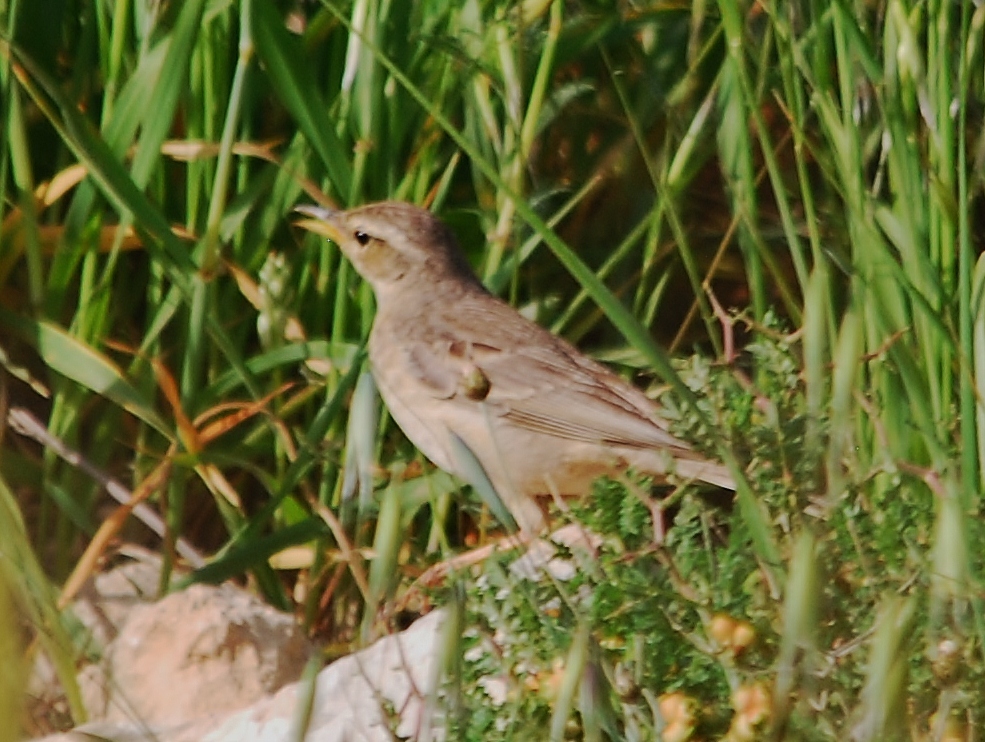
Long Billed Pipit redux

Saturday morning found me on Mt Amasa looking for better views of Long Billed Pipit. A sit-and-wait strategy paid off - after a minutes I picked up their calls and a few seconds later was rewarded with cracking views as they brought a variety of insect life for their nestlings.
 What a supercilium!


Finally, a view of the bill sans bugs.


A Blue Rockthrush made its customarily distant appearance.

I left soon after this and drove up to Yatir Forest. It was getting towards the hot part of the day and things were quietening down. However, I immediately found a very active pair of Eastern Bonelli's Warblers,
A Woodchat Shrike,
Long Legged Buzzard and a passage of Lesser Spotted Eagles and Steppe Buzzards going over.

A Spur-thighed Tortoise (Testudo graeca) was great to see.


This next bird probably deserves a blog entry of it's own. Last week at Sde Boker I saw this flitting around in a tree . . .


I thought this could be an Eastern Olivaceous Warbler although I have to admit my first thoughts were along much rarer lines - Sykes' Warbler (Iduna rama). I had a search through all my books but couldn't pin it down. Separating Sykes' and the elaeica race of Eastern Olivaceous Warbler can be problematic so I decided that it was time for expert opinion. A flurry of emails later and the consensus opinion emerged that this was a Caspian Reed Warbler! To be honest, I didn't even consider this option at the time, maybe if it had been in lush vegetation nearby I may have. I guess the lesson is to always keep an open mind and remember that this is migration in Israel - anything may turn up anywhere. With thanks to B. Granit, Y. Perlman, J. Smith and R. Standing for their extremely helpful comments.

Less problematic birds of the day were this very smart Northern Wheatear,
 a fine, upstanding Isabelline Wheatear,


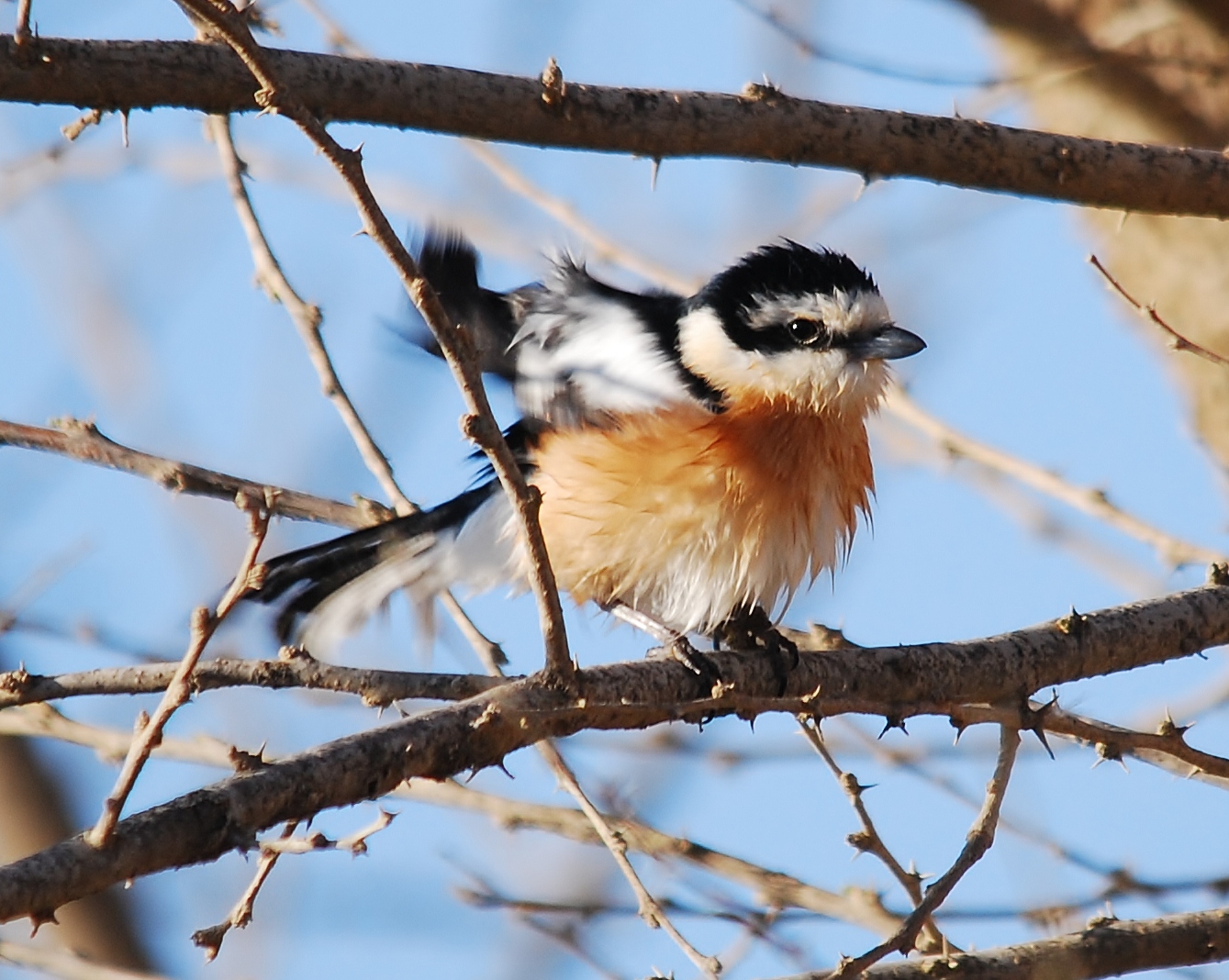
 and a very bedraggled Masked Shrike.

Sunday, 1 April 2012

Various at Sde Boker

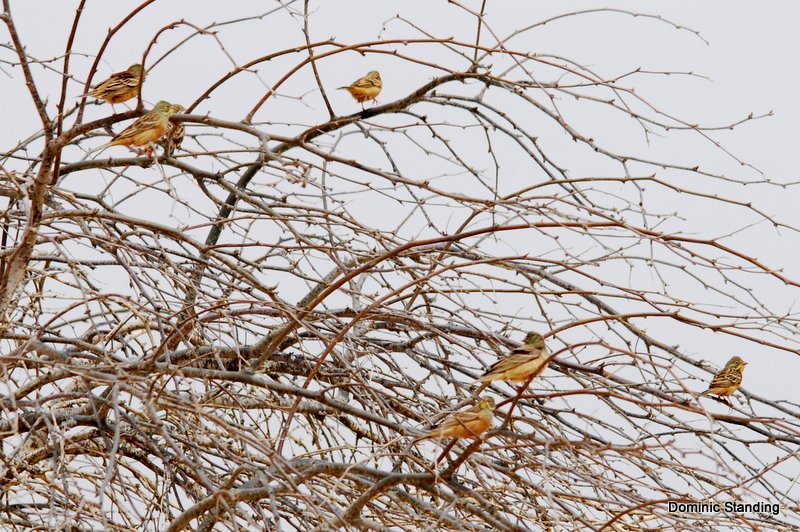
Nothing out of the ordinary at Sde Boker this morning except for a flock of 7+ Ortolan. They were in fantastic plumage.


Equally, if not more, stunning was this impeccably plumaged male Masked Shrike.

The Siberian Stonechat, also in black, white and orange was at the alfalfa patch again.

Heard some croaking overhead - a flock of Night Herons overflying the campus.

Back at Nir Oz there have been a number of Marsh Harriers passing through plus this 2-3cy Pallid Harrier.

A Scops Owl made an appearance in a Eucalyptus tree outside our house - definitely my favourite garden bird.

Friday, 30 March 2012

Citrine Wagtail

Male Citrine Wagtails are truly stuning birds. This individual at Sansana Resrvior this morning was almost luminous in the early morning sun.

Other interesting passage birds around the water were a single Black-headed Wagtail among the Pieds,  Little Stints,
Black-winged Stilt, Ruff. A few Pallid Swifts swooped in to skim the water.

Stopped in at Wadi Olim on the way home. Olivaceous (below), Cetti's, Willow Warblers, Chiffchaffs and Blackcaps were abundant in the reeds.


Wednesday, 28 March 2012

Pied Wheatear

There's a small, nondescript wadi that runs at the back of Sde Boker cemetery. It has been very worthwhile walking along it as it seems to attract a lot of birds - many warblers including Rupell's and Orphean, Ehrenberg's Redstart to name but a few. And of course, lots of wheatears (Black-eared, Northern, Isabelline). This one in particular stood out from the crowd. There's been a bit of discussion about the current Pied/Cyprus wave that's coming through at the moment and there's no doubt that care needs to be taken in identifying them. I'm confident that the photos below show a Pied Wheatear but all comments are welcome.
For me, the tail pattern - wider at the outer tail and almost broken at t3, t4 - nails it. One from the top,
 and one from underneath.

Lunchtime birding at Sde Boker often turns up a surprise. Another exciting wheatear - Cyprus! Such a shame that wire is in the way.

 Note the terminal tail band is solid.

Also through was my first Ortolan of the season. Lovely bird.
Still many Cretzschmar's around.
A distant European Cuckoo flew past as a final treat before going back to the lab.

Sunday, 25 March 2012

Two birds in the hand . . .

are, in this case, better than one in the bush. Darren and Chris were ringing at Sde Boker and had caught two (!) male Semi-collared Flycatchers. Superb.

Otherwise, the morning was notable for the increased numbers of warblers. Siberian Stonechat, Bluethroat, Masked Shrike, Desert Finches, many wheatears also made an appearance.

NW India - 9th to 22nd February 2020 (Kosi River, Corbett NP, Haripur Dam, Pangot, Sattal, Chopta, Walterre)

If you look through the Birds of the Indian Subcontinent (Grimmett, Inskipp and Inskipp, 2011) you cannot help noticing the huge range of s...